Audi A1 Timing Chain Rattle on Cold Start Explained
What It Means and What to Do
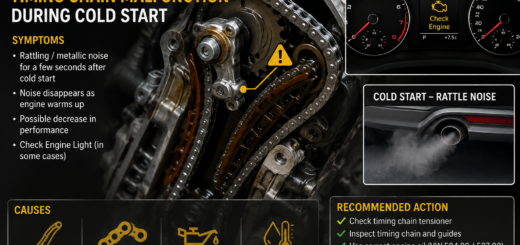
A timing chain rattle on cold start is one of those noises that can make any Audi A1 owner instantly uneasy. For a second or two after starting the engine, you may hear a metallic rattling or brief clatter before the sound disappears. Sometimes it happens only on chilly mornings. Sometimes it becomes more frequent over time. Either way, it is not a noise to ignore.
The Audi A1 is a refined, compact car, but like many modern engines, it relies on a timing chain system that must stay properly tensioned and lubricated. When something in that system begins to wear or fail, the first sign is often a rattle during startup. Understanding what causes the noise, how serious it may be, and what steps to take can save you from costly engine damage.
What Is the Timing Chain and Why Does It Matter?
The timing chain connects the crankshaft and camshaft, keeping the engine’s valves and pistons working in sync. In simple terms, it ensures that everything opens and closes at the correct time. Without that precise timing, an engine can run poorly or, in severe cases, suffer major internal damage.
Unlike a rubber timing belt, a chain is designed to last longer. That does not mean it lasts forever. Chains stretch over time, guides wear, and tensioners can lose pressure or fail. When this happens, the chain may slap against its guides or become loose for a moment on startup, creating the familiar rattling sound.
In an Audi A1, timing chain noise is often most noticeable when the engine has been sitting overnight or for several hours. Once oil pressure builds, the sound may disappear, which is why some drivers dismiss it as harmless. Unfortunately, that brief noise can be an early warning sign.
Why Timing Chain Rattle Happens on Cold Start
Cold start rattling usually points to a lubrication or tensioning issue. When the engine is off, oil drains away from some internal components. On startup, it takes a few seconds for oil pressure to fully circulate. If the timing chain system is worn or weak, that brief delay is enough for the chain to rattle.
Common causes include:
- Worn timing chain tensioner
- Stretched timing chain
- Damaged or worn chain guides
- Low or degraded engine oil
- Oil filter issues causing delayed pressure buildup
- Sludge buildup restricting oil flow
- Incorrect oil specification or extended oil change intervals
In some cases, the tensioner may not hold enough pressure after the engine has been off for a while. As a result, the chain slackens briefly at startup. In other cases, the chain itself may be stretched enough that the tensioner cannot keep up. Either situation can produce a rattle.
Is a Cold Start Timing Chain Rattle Normal?
A very brief startup noise is not unheard of in some engines, especially in older vehicles or in cold weather. However, a repeated metallic rattle from the Audi A1 should not be considered normal if it happens regularly, lasts more than a second or two, or becomes louder over time.
A little extra noise on a freezing winter morning may not mean immediate disaster. But if the sound appears consistently, you should treat it as a warning. Timing chain problems do not usually fix themselves, and waiting too long can turn a relatively manageable repair into major engine work.
How to Tell If the Rattle Is Coming from the Timing Chain
Not every cold start noise is caused by the timing chain. Audis can make other startup sounds too, and some are harmless. Distinguishing between them helps narrow down the issue.
Timing chain rattle often sounds like:
- A fast metallic clatter or chatter
- Noise coming from the front or top of the engine
- A sound that lasts one to three seconds after startup
- A rattle that disappears once oil pressure builds
- A noise that becomes more common in colder weather
Other noises that can sound similar:
- Exhaust heat shield vibration: Often a tinny buzzing rather than a deep mechanical rattle
- Accessory belt issues: May sound like squealing or brief grinding
- Hydraulic lifter noise: Usually a tapping sound, not a chain-like rattle
- Starter motor issue: Can create a brief grind or whirr during cranking
If the sound is definitely mechanical, metallic, and linked to startup, the timing chain system is one of the first places to check.
Audi A1 Engines Most Commonly Associated with Timing Chain Noise
Some Audi A1 engines are more likely than others to develop timing chain concerns, especially as mileage increases. This is particularly relevant on certain petrol engines where chain stretch and tensioner wear have been known to occur.
The likelihood depends on the exact engine version, maintenance history, and driving conditions. Short trips, infrequent oil changes, and low-quality oil can all increase wear. Even if your A1 has not yet developed a serious issue, regular cold start rattle should prompt a proper inspection.
If you are unsure which engine your Audi A1 has, check the service book, registration documents, or engine code. Knowing the engine specification helps a mechanic assess whether your particular version is known for chain-related problems.
What Happens If You Ignore the Rattle?
Ignoring timing chain rattle is risky. At first, the noise may only last a second or two. But if the chain stretches further or the tensioner continues to weaken, the engine can begin to lose timing accuracy.
Possible consequences include:
- Poor engine performance
- Rough idling
- Misfires
- Check engine light illumination
- Difficulty starting
- Engine timing fault codes
- In severe cases, chain jump or engine internal damage
If the chain jumps a tooth or more, valve timing can become incorrect. In an interference engine, this can allow valves and pistons to collide. That can mean bent valves, damaged pistons, and a very expensive repair bill.
The key point is simple: a startup rattle may be an early symptom, not the problem itself. The actual damage may still be small at first, which is why early diagnosis matters.
What to Check First
If your Audi A1 has a timing chain rattle on cold start, there are several sensible first checks before assuming the worst.
1. Check the oil level
Low oil can reduce lubrication and delay proper tensioner operation. Make sure the oil is at the correct level according to the dipstick or electronic system, depending on your model.
2. Confirm the oil is the correct grade
Using the wrong oil can affect pressure, flow, and cold-start behavior. Audi engines are usually designed for specific oil standards. If the wrong viscosity or specification has been used, it may contribute to startup noise.
3. Review the service history
Long oil change intervals can accelerate chain and tensioner wear. If the car has missed services or had infrequent oil changes, the timing system may have suffered.
4. Listen carefully to the noise duration
A one-second rattle is concerning but not as alarming as a noise that lasts several seconds or repeats every morning. Track how long it happens and whether the sound is getting worse.
5. Scan for fault codes
A diagnostic scan may reveal camshaft timing correlation faults or other engine management codes related to the timing system. Even if the warning light is off, stored codes can provide useful clues.
How Mechanics Diagnose the Problem
A qualified mechanic will usually start with a combination of listening, inspection, and diagnostic testing. The timing chain system is not always easy to inspect directly, but there are several ways to assess wear.
Typical diagnostic steps include:
- Checking oil condition and level
- Scanning for engine fault codes
- Listening to startup noise with a stethoscope or workshop tools
- Measuring camshaft and crankshaft timing data
- Inspecting tensioner extension where possible
- Looking for signs of chain stretch or guide wear
If the evidence points to chain wear, the mechanic may recommend replacing the chain, tensioner, guides, and related components as a set. That is often better than replacing just one worn part, since the system works as a unit.
Repair Options and What They Usually Involve
The right repair depends on the cause of the rattle. A small problem may be fixed with oil service and inspection, while a worn chain assembly usually needs more extensive work.
Possible repair paths:
Oil service and maintenance correction
If the oil is dirty, low, or incorrect, a proper oil and filter change may reduce the noise. This is the simplest outcome, but it is only a real fix if the timing components themselves are still in good condition.
Timing chain tensioner replacement
If the tensioner is the main issue, replacing it may solve the cold start rattle. However, if the chain or guides are also worn, the job may not last unless those parts are addressed too.
Full timing chain kit replacement
In many cases, the best solution is a full kit replacement including:
- Timing chain
- Tensioner
- Guides
- Sprockets, if needed
- Seals and gaskets
- Fresh oil and filter
This is more expensive, but it often provides the most reliable long-term repair.
Engine inspection for secondary damage
If the chain has been rattling for a long time or there are performance issues, additional inspection may be needed to check valve timing, camshaft wear, or internal engine damage.
How Much Does It Usually Cost?
Repair costs can vary widely depending on the exact engine, labor rates, and how much work is needed. Timing chain jobs are typically labor-intensive because the chain is often located in a difficult-to-access part of the engine.
A simple oil service is relatively inexpensive. A tensioner replacement costs more. A full timing chain kit with labor can be a significant expense. However, compared with the cost of engine damage from a failed chain, preventive repair is often the smarter financial decision.
It is also worth remembering that delay can make the final bill much higher. If the chain jumps timing and damages the engine, the repair may move from a chain job to a head rebuild or engine replacement.
Can You Still Drive the Car?
This is one of the most common questions owners ask. The honest answer is that it depends on the severity and frequency of the noise, but caution is essential.
You should avoid driving or get the car checked quickly if:
- The rattling lasts more than a couple of seconds
- The noise is getting louder
- The engine runs rough
- The check engine light is on
- You notice misfires or reduced performance
- The rattle happens every cold start
If the noise is brief and rare, you may be able to drive carefully for a short time while arranging inspection. But if the sound is strong and consistent, it is safer to limit use until a mechanic has looked at it.
How to Prevent Timing Chain Problems
While not every failure can be prevented, good maintenance greatly reduces the risk of timing chain trouble.
Helpful habits include:
- Changing engine oil on time
- Using the correct Audi-approved oil specification
- Replacing the oil filter regularly
- Avoiding cheap or incorrect oil
- Not ignoring startup noises
- Addressing warning lights promptly
- Having the engine checked if the rattle becomes more frequent
Short trips and stop-start driving can be hard on oil quality, especially in colder weather. If most of your driving is around town, sticking to strict oil service intervals becomes even more important.
Example: A Mild Rattle That Turned Into a Bigger Repair
Consider an Audi A1 owner who notices a brief rattle for about one second on winter mornings. At first, the noise seems harmless because it disappears immediately. A few months later, it begins lasting longer and appears on more mornings. Eventually, the car develops a check engine light and rough idle.
In this case, the early rattle likely indicated a tensioner or chain wear issue that gradually worsened. Had the owner inspected the car sooner, the repair might have been limited to a chain kit and tensioner replacement. Waiting too long could result in additional damage and a much higher bill.
This is why early attention matters. A sound that seems minor today may be the first stage of a larger mechanical problem.
Conclusion
An Audi A1 timing chain rattle on cold start is a warning sign worth taking seriously. While it may begin as a brief metallic noise that fades after a second or two, it can point to worn chain components, a weak tensioner, or lubrication issues that need attention. The earlier the cause is identified, the easier and cheaper the fix is likely to be.
If your A1 rattles on startup, start with the basics: check the oil, review the service history, and listen closely to how often the noise occurs. If the sound persists or worsens, arrange a professional inspection as soon as possible. Catching timing chain problems early can help protect the engine and keep your Audi running smoothly for years to come.